
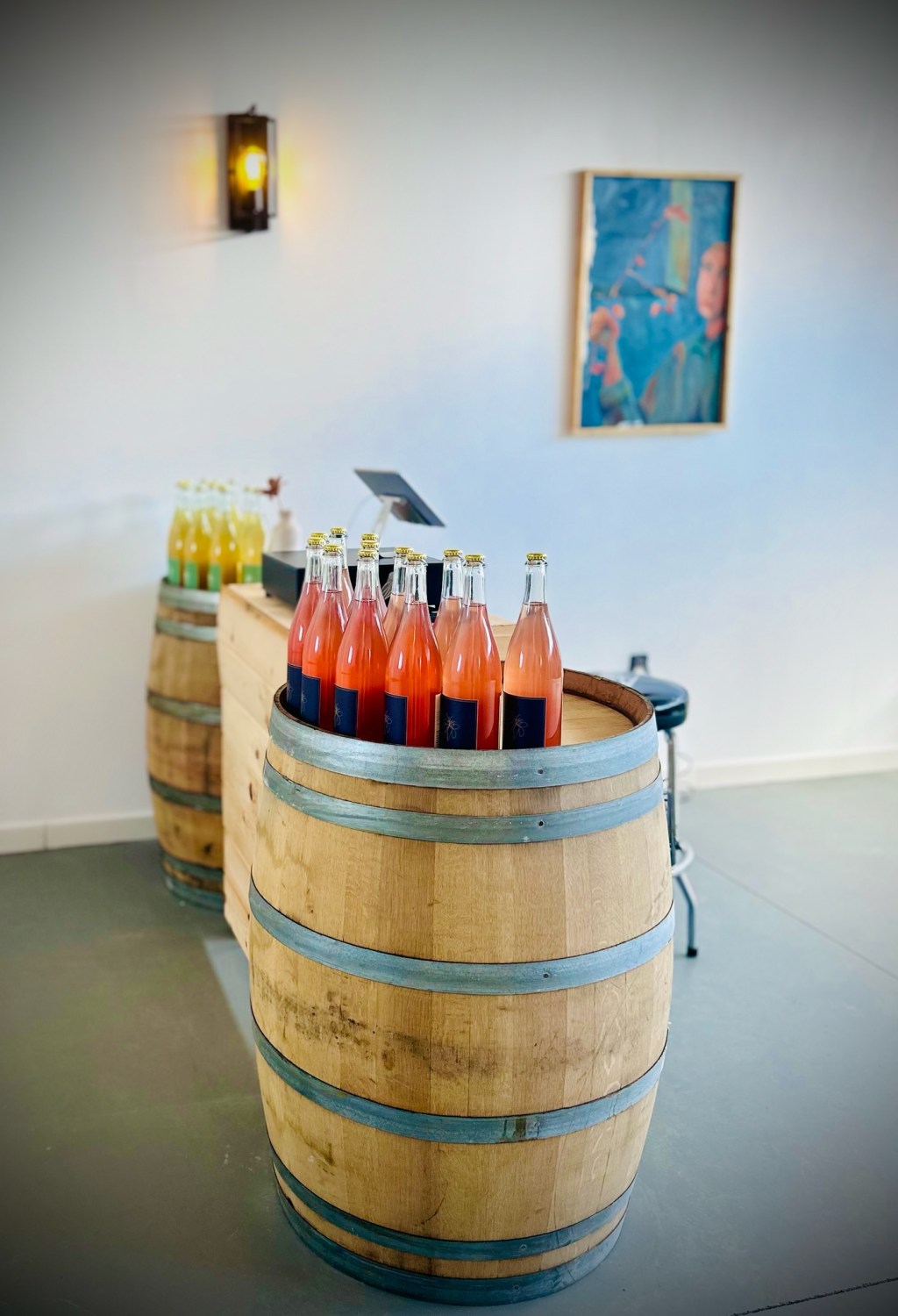
Sometimes we live our lives accepting the status quo because we don’t know any better. Then a disruptor comes along and paints our world in the technicolor of possibility–and suddenly nothing will ever be the same. Calling Daylily Estates a ‘disruptor’ feels a little funny, because there’s nothing particularly rebellious about what they’re doing. I wouldn’t call the gentlemen behind Daylily Estates the “bad boys of Indiana wine” and I know for a fact they’re not traipsing through the vineyards in leather jackets with switchblades. At first blush, they may not seem like radicals–that is, until you look at them through the narrow scope that is wine production in Indiana–perhaps, even more specifically, wine production in Northeastern Indiana–and then it becomes abundantly clear that Daylily Estates is not just here to do more of what’s already been done: they’re here to do it better.
I said, “better” and I meant what I said. There will be no apologies issued from me for these words. I know that it’s a fucking bold claim. And before you get your panties in a bunch thinking that some cishet white men are traipsing around Churubusco pretending that they’ve somehow reinvented wine, let me stress that the claim doesn’t belong to the brilliant minds behind Daylily Estates. These are my words. I chose them. I wrote them. All you have to do is comprehend it–pick up what I’m laying down, babe. I believe wholeheartedly, unwaveringly, and passionately in what these dudes are doing. I am brazen enough to say that they are going to break the stasis of wine culture in Northeastern Indiana. The dudes behind Daylily Estates probably wouldn’t be so bold as to make such big claims about themselves and their abilities. They’re insanely talented, but also seriously humble. I left the vineyard wondering if they really know how skilled and singular they are. If not, hopefully by the end of this blog they’ll have an inkling. The benefit of the lack of ego at Daylily is that they’ve managed to craft an environment at their winery where novices and wine-pros alike can feel comfortable–this is no small feat. The wine industry is so often more about dick swinging than it is about enjoying wine: but they are having none of the bullshit at Daylily Estates. There are no right or wrong answers when you sip their wines–so it’s safe to speak your mind, feel your feelings, and enjoy the wine.
Daylily founder and winemaker, Cody Kraus, co-founder Chris Leonard, and co-founder/sommelier Troy Veglatte are becoming pioneers of a growing movement to craft better quality wines in our region. If you don’t know their names already, learn them now. There is no doubt in my mind that within my lifetime these dudes’ names will be synonymous with discussions of an American Viticultural Area (for the noobs not familiar with this term, it’s just a fancy way of saying a protected and recognized wine growing region) that doesn’t even officially exist yet. Sure, there’s the Indiana Uplands in the lower portion of our state and the massively sprawling Ohio River Valley–but winemaker Cody Kraus dares to dream of the day when a new AVA is designated, encompassing our little slice of paradise. As long as dope people keep doing dope shit in Northeastern Indiana: this dream could very well become a reality. I don’t just see this as being feasible; I see this as being likely if more dope people want to do dope things here.
But what’s so special about Daylily Estates? Don’t we already have a number of vineyards and producers in the area? Sure we do–and everybody’s probably already got their favorite. I’d like to take this time to remind you that it’s okay to change your mind. Up until today, I did not have a favorite local winery because none scratched all of my itches. Sure, I’d grab a bottle or two here and there. I’d give support and kudos to whomever I felt deserved it whenever I felt it was deserved. (I’ll continue to do that.) But, ultimately, nobody made me turn my head and say, “I see you, sexy, and I like what you’re doing over there.” One trip to Daylily Estates and I’m already confident that they tick all the boxes–so that’s true love. We can talk about what they’re doing that’s so special, but what they’re not doing is almost more exciting. While they’re definitely working to offer a variety of wines, so that there’s something for everyone no matter what you like, they are not offering cloyingly sweet niche bottles with artificial flavors–and there’s absolutely no boozy slushies at this vineyard. Don’t get me wrong: sommelier Troy Veglatte loves a sweet wine and can wax poetic about the beauty of finding the time and place to enjoy a sweeter sip. You can even anticipate a canned wine drop in the near future–low ABV, considerably sweeter than I am, and crushable juicy goodness. The point is, they bring more to the table than just sweetness. There’s real substance behind what they’re producing. I’m swooning.
You know what else they’re not doing? Treating their crops with glyphosate. Do you know that word–glyphosate? What if I said, “glyphosate-based herbicides?” What if I just came out and said, “Roundup?” Locally, there are vineyards that treat their grapes this way. Personally, I’d rather support a vineyard that stands against these practices. Daylily Estates isn’t simply anti-glyphosate, they’re completely and emphatically committed to regenerative agriculture. What does that mean? It’s an approach to farming that primarily focuses on conservation and rehabilitation. The benefits of this approach are numerous and varied, including but not limited to top soil regeneration, increasing soil biodiversity, supporting pollinators, and ultimately reversing climate change. So no big deal or anything, they’re just saving the world one vineyard at a time. Walk through the baby vines currently growing at Daylily Estates and you’ll quickly see that clover is the cover-crop of choice. Planting clover amongst the vines aids in the prevention of soil erosion, it enhances nitrogen levels in the soil, and even supports pollinators. With this approach to farming, it just makes sense that all of Daylily Estates facilities are completely off-grid and solar-powered.
So, here’s the time for some honest truth: I am currently drinking their Brianna Pét-Nat while writing this. I often like to drink a little wine when I write. When I write about something that I have very few nice things to say about, I will drink more wine to compensate. It makes me nicer–and funnier. I am a glass and a half in on their Brianna Pét-Nat and it’s not because I don’t have a million nice things to say–it’s because they make really fucking good wine. Brianna is a pretty common grape in the Midwest, though it was only bred in the early 1980s. I know that there are local vineyards that have won awards for their Brianna wines, but none have really knocked my socks off the way that Daylily Estates’ Brianna Pét-Nat has. This wine gives lively bubbles when first opened. With early pours, I was getting serious tropical fruits, like pineapple, and gentle floral notes–though not intensely aromatic. My bottle has been open for a hot minute; the wine has lost some bubbles, but I’m now noticing more peach and honey than I was before. These are subtle changes. If you’re not paying close attention to your wine and thinking hard about it, you’ll likely not notice this sort of thing. But for those of us who like to get down and nerdy with our wines, there’s a lot to unpack in this Brianna Pét-Nat. You may be surprised to know that I like it just as much, if not more, than their Catawba Pét-Nat.
If you’ve been following for awhile, you already know that I fucking love Catawba. This grape holds no clout on the world stage. They could not give a fuck about Catawba in Europe. Like Brianna, this is an inherently American varietal known for its mix of fruitiness and occasional foxiness. Poets have penned odes to Catawba wine. I could see myself penning an ode to Daylily Estates’ Catawba Pét-Nat. I’ve had a lot of Catawba wines–maybe too many by some standards–but never before have I had a Catawba Pét-Nat. The Catawba is not quite as effervescent as the Brianna Pét-Nat, but it makes up for it in its gorgeous pink hue. If you like Superbloom by Las Jaras, you will like this Catawba Pét-Nat. All the Watermelon Jolly Rancher, with none of the jalapeño herbaceousness or super salinity, this Pét-Nat is a smooth sip that would pair gorgeously with some spicy food.
I currently have two Daylily Estates bottles in my wine collection. I’m about to spend the next few months drinking a myriad of wines from around the world as part of my WSET 2 studies. I look forward to adding more Daylily Estates bottles to my collection in the near future. If that doesn’t say something about the quality of the product they’re crafting, I don’t really know what more I can say. These are the wines I have wanted to see produced in Indiana since I first moved here. I don’t know if I’m actually allowed to talk about this, but I sipped a Traminette produced by Daylily Estates. It will age for a few more months before bottling, but I imagine it will be released to the public soon. Y’all, I don’t know what you already know, but Traminette is the state grape of Indiana. I had yet to find a Traminette that fired me up until Daylily Estates showed up and said, “Bet.” It’s our fucking state grape, people. We should be producing wine that actually does it justice. We have so much to offer. We simply have to put in the effort to create something worthwhile. Daylily Estates gets it. They have my unyielding support, because what they’re crafting is exceptional, and the methods they’re employing are valuable and visionary. They do Indiana justice.

 Plonk & Pleasure
Leave a comment