
I don’t think it’s particularly divisive of me to say that invasive species aren’t really a good thing. Take the Spotted Lanternfly: after hitching a ride on a delivery of stone, it made its way from its native China to Pennsylvania where it proceeded to cause nearly $43 million in damages. Having previously lived in an infested city, I can assure you, these pretty little nuisances wreck plants–there are about 70 species of plants they’ll happily feast on, leaving a mess of black, soot-like mold in their wake. At the request of the city forester, citizens of my hometown made a habit out of killing any and every Spotted Lanternfly that crossed their path. In the summertime, the sidewalks were practically polka-dotted with the corpses of these pests–and I only wish I was exaggerating.
Despite our best efforts, and the many battles won, though we killed hordes of Spotted Lanternflies, it simply wasn’t enough. By 2019, the infestation had reached the mean streets of Philly. The frenzied breeding of these pests was so rampant that Pennsylvania’s Department of Agriculture asked citizens to destroy egg cases and squash adult bugs on sight. The concerted effort has never been enough to defeat the invading species–I’ve even begun to see billboards warning of these pests in my new home: Indiana.
But hey, maybe it’s not so bad. These nuisances have shown up, wreaked havoc, killed countless plants, caused millions in damage, and spread across several states. Do you know what we’ve gotten out of the deal, other than upset and headache? Honey. Not honey from the Spotted Lanternflies themselves–cause ew, gross and also they don’t make honey–but normal, regular ol’ honey from the bees. Bee’s honey production has been impacted by the invasive presence of Spotted Lanternflies in an unexpectedly delicious way.
It took beekeepers a little while to puzzle together what had suddenly caused an unfamiliar, uniquely smokey, maple-bacon-esque aroma in the honey produced in Eastern Pennsylvania. There weren’t new species of plants for the bees to feast on. Beekeepers sampled the honey, but found it didn’t taste like anything from any of the flowers that would have been blooming at that time. I’d love to string you along for a few more sentences telling you all of the things that it wasn’t, but more than that I wish I could see your face when I tell you what it was that caused the yummy shift in flavor. It was Spotted Lanternfly Honeydew. (Surely somebody reading this just yelled “ew,” but others of you–much like myself when I first learned about this–are probably like, “Well, that sounds cute. What’s that?”) My dear reader, if honey is essentially ‘bee puke,’ honeydew is basically Spotted Lanternfly poop–a sugary excrement that bees love to gobble up.
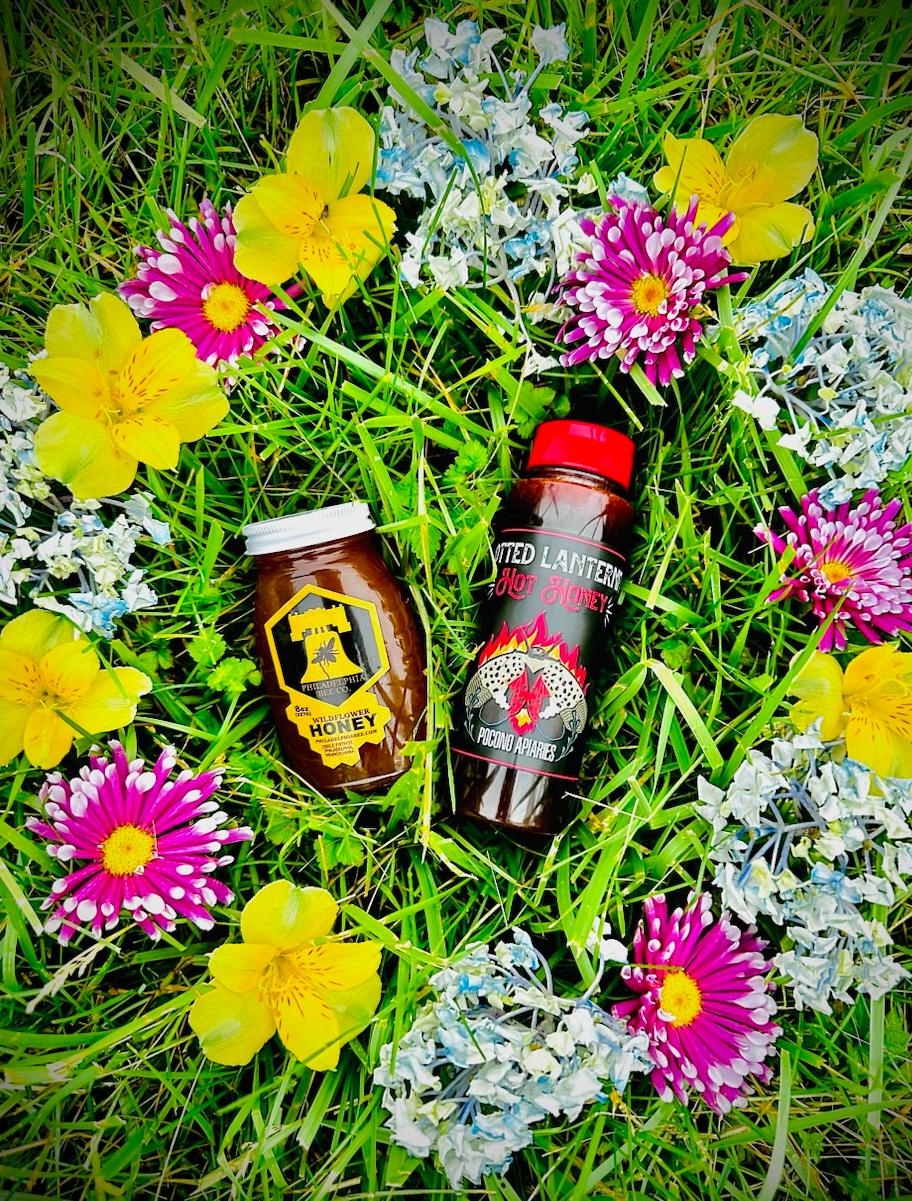
These new honeys tend to be much darker and more amber colored than honeys collected during the same season in years prior. A smokey, maple-bacony aroma is present in many. The flavor profiles will vary, but tend to be warm and caramelized, with notes of date or fig. I was lucky enough to source two bottles from near my hometown in Pennsylvania. My first bottle is from Philadelphia Bee Co. They’re calling this new flavor of honey Doom Bloom and define it as being a “robust” and “smokey” fall honey. I was also lucky enough to get a bottle of Pocono Apiaries Hot Spotted Lanternfly honey. If you’re a honey lover, or just an all-around foodie, I strongly suggest you find a way to grab a bottle or three. These honeys are unlike any you’ve ever tried before and, who knows, we may never get anything quite like it again. It’s really one of those rare gifts from nature. We often say, “When life hands you lemons: make lemonade.” As it turns out, when life handed us an infestation of invasive species, we made something even sweeter: honey.
 Plonk & Pleasure
Leave a comment